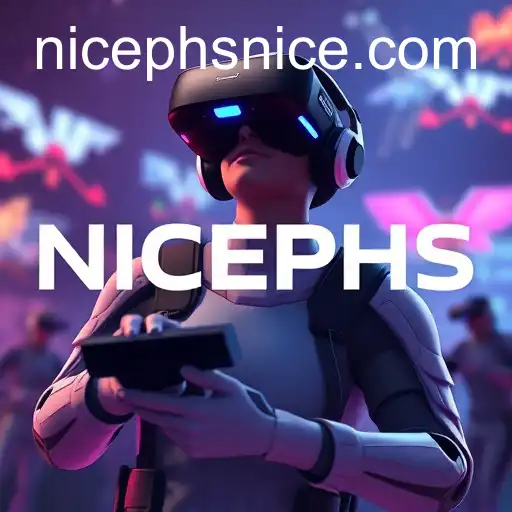
nicephs | Exploring the Role of Educational Games in Modern Learning

In today's rapidly evolving educational landscape, the integration of technology into learning processes has become increasingly prominent. Among the diverse technological tools available, educational games stand out as an innovative approach to enhancing learning experiences for students across various age groups. By utilizing gaming mechanics within educational frameworks, educators can foster an engaging and interactive environment that facilitates active learning and understanding.
The concept of educational games revolves around the principle of learning through play, where students are encouraged to explore new concepts and apply knowledge in a dynamic setting. These games often encompass a range of subjects, from mathematics and science to language arts and social studies, offering a versatile platform for learners to develop critical thinking, problem-solving, and collaborative skills.
One key advantage of educational games is their ability to capture students' attention and motivation. With game elements such as points, levels, and immediate feedback, learners are provided with a sense of achievement and progress, driving them to explore topics more deeply. This immersive experience contrasts with conventional teaching methods and often leads to improved retention of information.
Furthermore, educational games can be tailored to individual learning styles and paces, catering to diverse student needs. Whether a student requires additional practice or seeks more advanced challenges, customizable game settings allow for personalized learning pathways, thus democratizing access to education.
Research has repeatedly shown that incorporating games into education can lead to significant improvements in student engagement and performance. As educators recognize the potential of gaming in promoting active participation, schools and institutions are increasingly integrating these tools into their curricula.
The future of educational games holds the promise of even greater advancements with the incorporation of artificial intelligence and augmented reality. These technologies are poised to offer increasingly realistic and adaptive learning environments, paving the way for a new era where education and entertainment converge seamlessly.
In conclusion, educational games represent a powerful tool for modern educators to enhance learning outcomes by creating captivating and personalized educational experiences. As this field continues to evolve, its potential to transform the way students perceive and engage with education is unprecedented. With the keyword "nicephs" signifying a step towards innovation in educational gaming, the journey to reimagining education for future generations is well underway.
The Rise of Gaming Dynamics in 2025
Exploring the latest trends and dynamics in the gaming industry in 2025, including the role of online platforms like 'nicephs'.
Gaming Trends and Dynamics Explored
Exploring current gaming trends and dynamics within the English game website landscape in 2026.
Evolving Digital Game Landscapes
Exploring the dynamics and influences of online gaming in 2025, with a focus on the platform 'nicephs'.
Online Gaming Trends: A Deep Dive into Nicephs
An exploration of the Nicephs platform, its impact on gaming culture, and the trends shaping the industry.